Local Government, Global Stage

ICLEI got our start – 35 years ago this year – as the “voice of cities and local governments” in international environmental negotiations. This is a role we proudly continue and in 2026, will strengthen further by opening more opportunities than ever before for mayors, councilmembers, county leaders, and Tribal leaders to engage with their international peers.
Our Local Diplomacy Unit helps your local government to:
- build international relations
- engage in global negotiations
- open pathways to economic ties that strengthen your community
- add a sustainability element to your “sister city” relationships
- position your city, town, or county for global recognition
This guide will help you take advantage of the local diplomacy offerings that are part of being an ICLEI member – whether you’re ready to dive in for 2026 or prepare to engage in 2027 and beyond.
A Short, Recent History of Local Government International Engagement on Sustainability and Climate
After our founding by a group of mayors determined to enact local legislation to halt ozone-layer-depleting chemicals – led by City of Irvine, California Mayor, Larry Agran – by the early 1990s, ICLEI had become the lead organization on cities and regions in what are known as the “Rio Conventions”: the United Nations’ three negotiating bodies on climate change, biodiversity, and desertification. (More on those below.)
The decades since have seen a continuous evolution for how the nations of the world cooperate, with moments of both concerted collaboration and diplomatic breakdowns. Today, in many parts of the world, inward-looking nationalistic fervor is on the rise, leading to governments backing away from “multilateralism.” In other words, countries are becoming more reluctant (if not outright refusing) to work together to solve global problems.
Anytime relations break down, it’s unfortunate and can lead to everyday impacts on people’s lives. But when the federal government of United States chooses to step back from global talks and partnerships, the impact is felt particularly hard. This is because of the outsized role the U.S. has historically played in the United Nations and other international institutions.
More than the millions of dollars the U.S. has traditionally contributed to these institutions, the U.S. inputs have included a wealth of American brainpower, science, legal processes, security, and talented public servants (many of whom previously served in local government). For the most part, the mission of all this investment was to make the planet safer, cleaner, more just, and more prosperous.
Those ideals are on shaky ground today.
Without U.S. support, we see the system of country-to-country collaboration thrown into a state of uncertainty, as evidence by the United Nations “UN80 reform” process – a self-reflective push to reorganize aimed at making the UN more streamlined (and able to operate on a tighter budget). The Rio Conventions are facing this same uncertainty.
It’s within this context, we see U.S. cities, towns, and counties take a different tack in terms of international engagement. Local governments across the United States – in both politically conservative and liberal regions – have tended to follow a more stable path toward more and more collaboration with their global peers. ICLEI USA supported more than 80 U.S. cities and counties to engage internationally last year alone. These cities’ efforts to preserve multilateralism not only contrasts with the federal governments’ but is opens doors for U.S. cities to cement their global leadership in ways that can benefit their communities for years to come.
What is Local Diplomacy, and Why Does It Matter to U.S. Cities Now?
Local diplomacy is just a fancy way of saying local governments in different countries are engaging with one another.
Mayors, councilmembers, county commissioners, department directors, sustainability coordinators, and many other roles can be central to successful local diplomacy. And while talking and building friendships is a core starting point, local diplomacy can also help cities promote business or trade deals, academic exchanges for students, co-hosted events, and other partnerships.
ICLEI USA is invested in supporting all these outcomes of local diplomacy. For example, from 2013 to 2015, we supported the China-California Climate Collaborative, a technical training that helped both regions share renewable-energy technology and explore options for renewables companies to invest in local economies.
The economic edge shouldn’t be downplayed: Over the years, numerous mayors have commented to us that they join ICLEI delegations abroad to make sure their city’s story is “on the map” as a preferred place for international companies to invest in. Their residents can appreciate efforts to bring jobs to their community from companies that care about environmental sustainability. Today, at least 40 of the U.S.’s largest cities have an international affairs or city diplomacy department. Our friends at The Truman Center keep an excellent map of their activities.
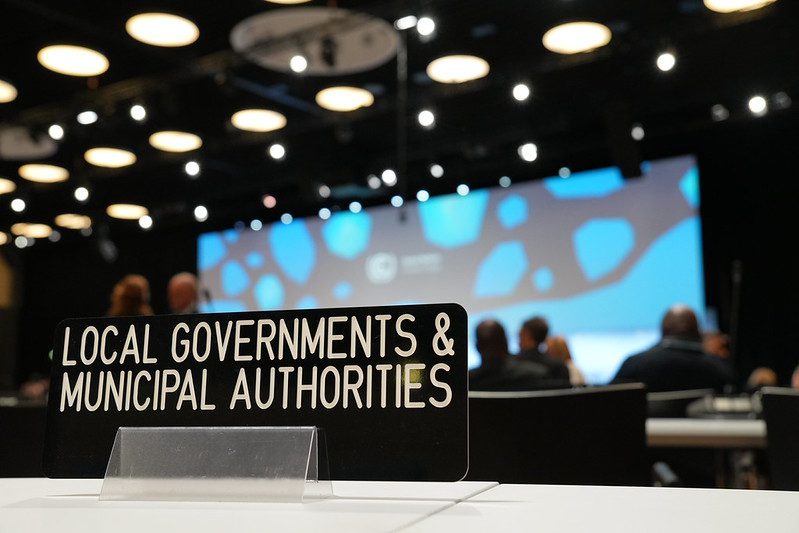
Of course, as the lead organization for the Local Governments and Municipal Authorities (LGMA) constituency group to the United Nations, much of our efforts center around the three environmental conventions. Over the decades, hundreds of ICLEI member cities have attended negotiations for:
- UN Framework Convention on Climate Change (UNFCCC) – covers GHG-mitigation, climate adaptation, and just transition
- UN Convention on Biological Diversity (UNCBD) – covers nature, conservation, and biodiversity
- UN Convention to Combat Desertification (UNCCD) – covers land use, water, food systems, and more
I am often asked, why isn’t there a convention on pollution? On social equity?
The answer is: Although the Rio Conventions are limited to the three themes above, numerous other platforms and processes exist – within the UN system, but also outside of it – that address all these issues and more. City, county and Tribal leaders are engaging in all these for a, too!
A few other important areas where cities engage are:
- Plastics Treaty negotiations
- UN Oceans Conference
- Food and Agriculture Organization (FAO) food systems dialogues
- The UN’s High-Level Political Forum for the Sustainable Development Goals (SDGs) – held every July in New York City
- The Conference on the Transition Away from Fossil Fuels – kicked off in Santa Marta Colombia, this year but with plans to continue its second event next year
- Urban7 and Urban20 engagements (more below)
- Climate Week NYC, held every September, as well as the various younger climate weeks around the country
- World Urban Forum – hosted every 2 years, next in 2028
- ICLEI World Congress – save the date for October 2027 in Pohang, South Korea
- Various sustainability forums or summits hosted by cities, such as the Petersburg Climate Dialogues or the New Delhi Global Sustainability Summit
What is ICLEI USA’s Local Diplomacy Unit?
In a given year, ICLEI USA supports between 50 and 120 U.S. cities, counties, and Tribes to engage internationally – and we intend to grow the Local Diplomacy Unit’s work in the coming years. It’s a foundational reason ICLEI members join the network; to bring home the best practices and inspiration from around the world.
In 2024, we formalized this work under the ICLEI USA Local Diplomacy Unit, giving our longstanding global engagement a name and a home. Initiatives our members work with us on include:
- Attending UN conferences, including the UN’s COPs, the UN Ocean Conference, the High-Level Political Forum on the SDGs, UN Environment Assembly, Innovate4Cities, and many more.
- Serving a coordinating role in the Urban7, or “U7,” engagement group to the G7 Group of Nations, including interaction with the Urban20 (U20) group.
- Race to Resilience Culture – an initiative pairing African and U.S. cities to share culture-based strategies for climate adaptation, with generous support from The Mellon Foundation and Climate Heritage Network.
- Cities Forward – our flagship resilience-building program for the Americas in partnership with the U.S. State Department, paring 12 U.S. cities with 12 cities in Latin America and the Caribbean.
- U.S.-India Transformative Energy Program – field visits for U.S. mayors and city staff to Indian cities to learn about solar and small hydro technologies.
- Urban Transition Alliance – a technical learning group for industrial-legacy cities from the U.S., China, the UK, and Germany.
- As founding partner to influential sign-ons and movements, including America Is All In and Global Covenant of Mayors.
Today, we tap into our 24 ICLEI offices around the world to bring our global members together. At anytime, your city or county can take advantage of our network to meet international counterparts – whether that’s as simple as having us connect you to cities doing similar work, or organizing a multicity roundtable at a global event.
How ICLEI USA is Driving Local Diplomacy in 2026
Here’s what we’ve been up to in June 2026:
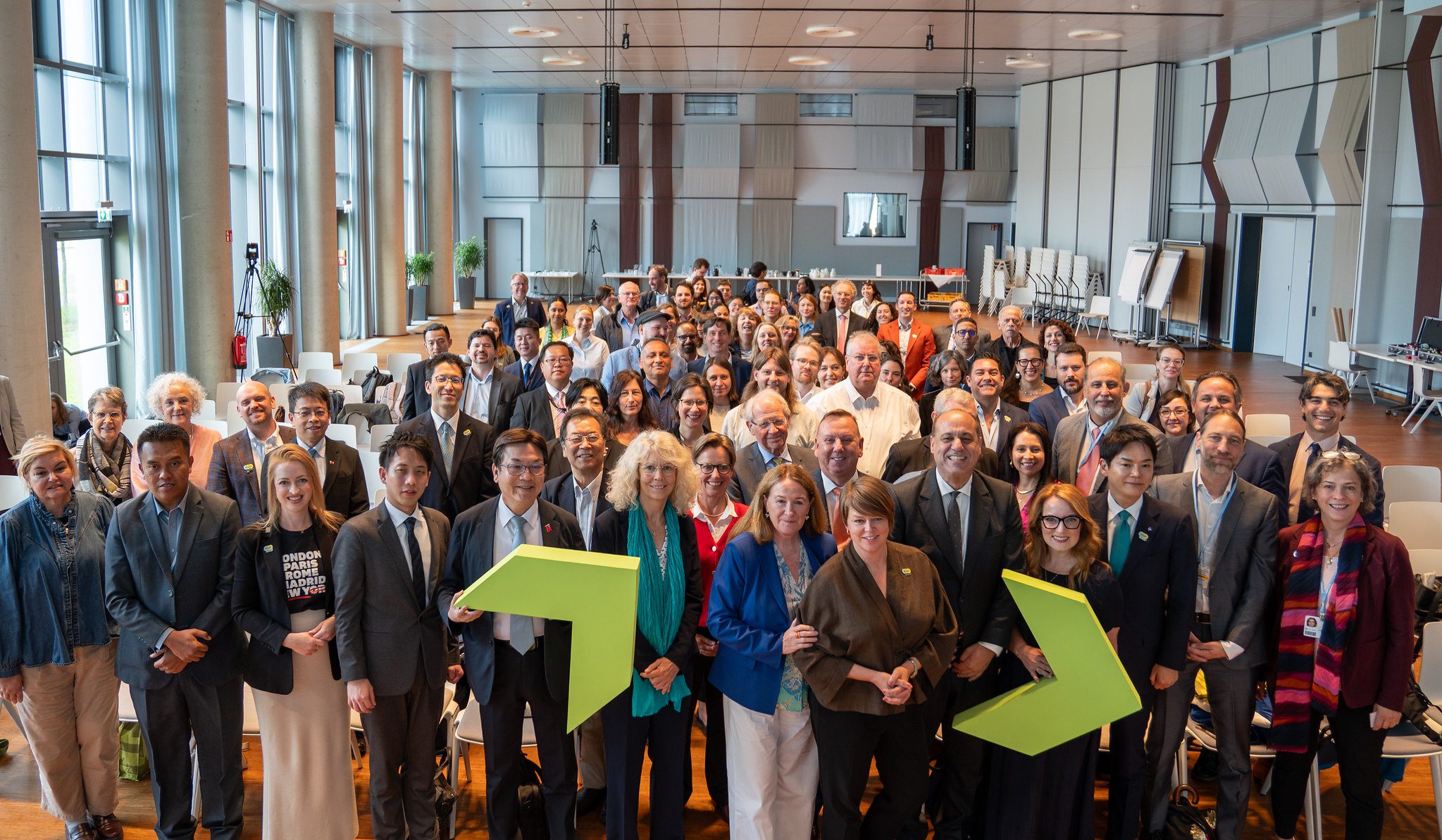
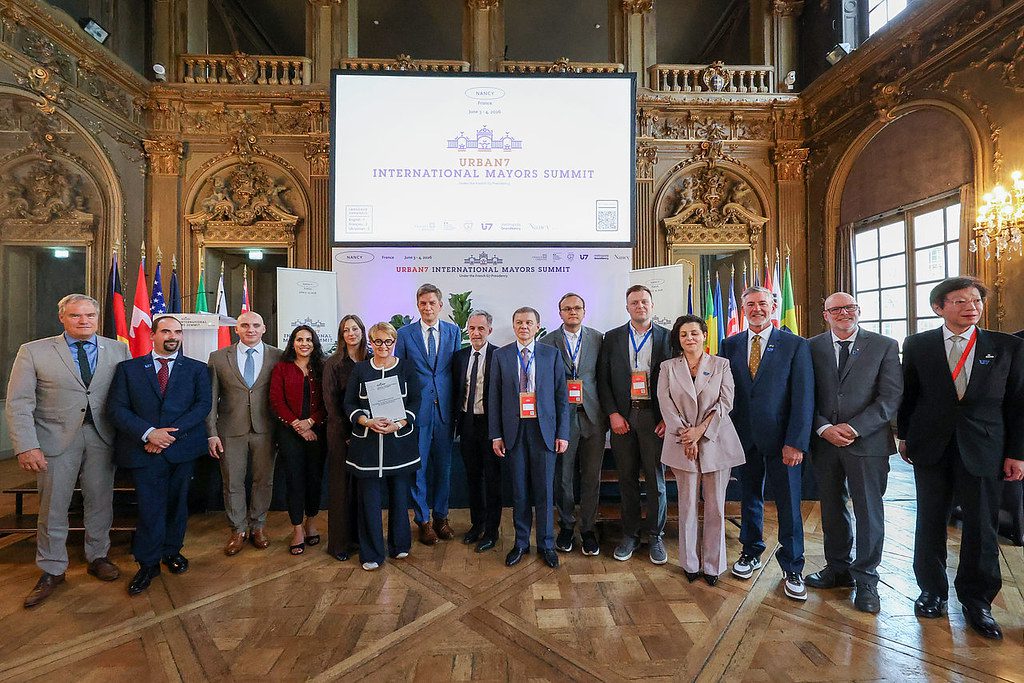
Urban7 International Mayors Summit, June 3-5 (Nancy, Francy)
The G7 is a powerful group of seven countries, including the United States, whose heads of state gather annually to discuss major issues surrounding trade, war and security, and (until recently) climate change. This year, the host nation is France, which took the historic step to recognize the “Urban7,” or U7, as an official engagement group. ICLEI serves as the global secretariat for the U7 and ensures that mayors from each G7 nation are actively involved. The Nancy Summit’s head of U.S. delegation was Mayor Steve Patterson of Athens, Ohio. Mayor Patterson was representing the U.S. Conference of Mayors, but also has roles as outgoing National League of Cities President and ICLEI USA member. In the opening plenary releasing the U7 Nancy Declaration – which outlines mayors’ positions on affordable housing, support to Ukrainian cities, and climate action among its asks of G7 leaders – Mayor Patterson said, “On behalf of cities in the U.S., we are not failing, we are not wavering from being on this mission with you and the rest of the world to tackle these global crises. From Canada, to Japan, to the EU, that Declaration we sign will set the tone and set the pathway. We have to continue to build relationships, to demonstrate trust in each other. The resilience of the Urban7 gives me hope that we can do this together.” Next year, the United States will host the G7 presidency. Whether or not the federal government uses it as a moment to strengthen international ties, the U.S. Conference of Mayors and ICLEI USA will ensure U.S. mayors are welcoming host to the Urban7.
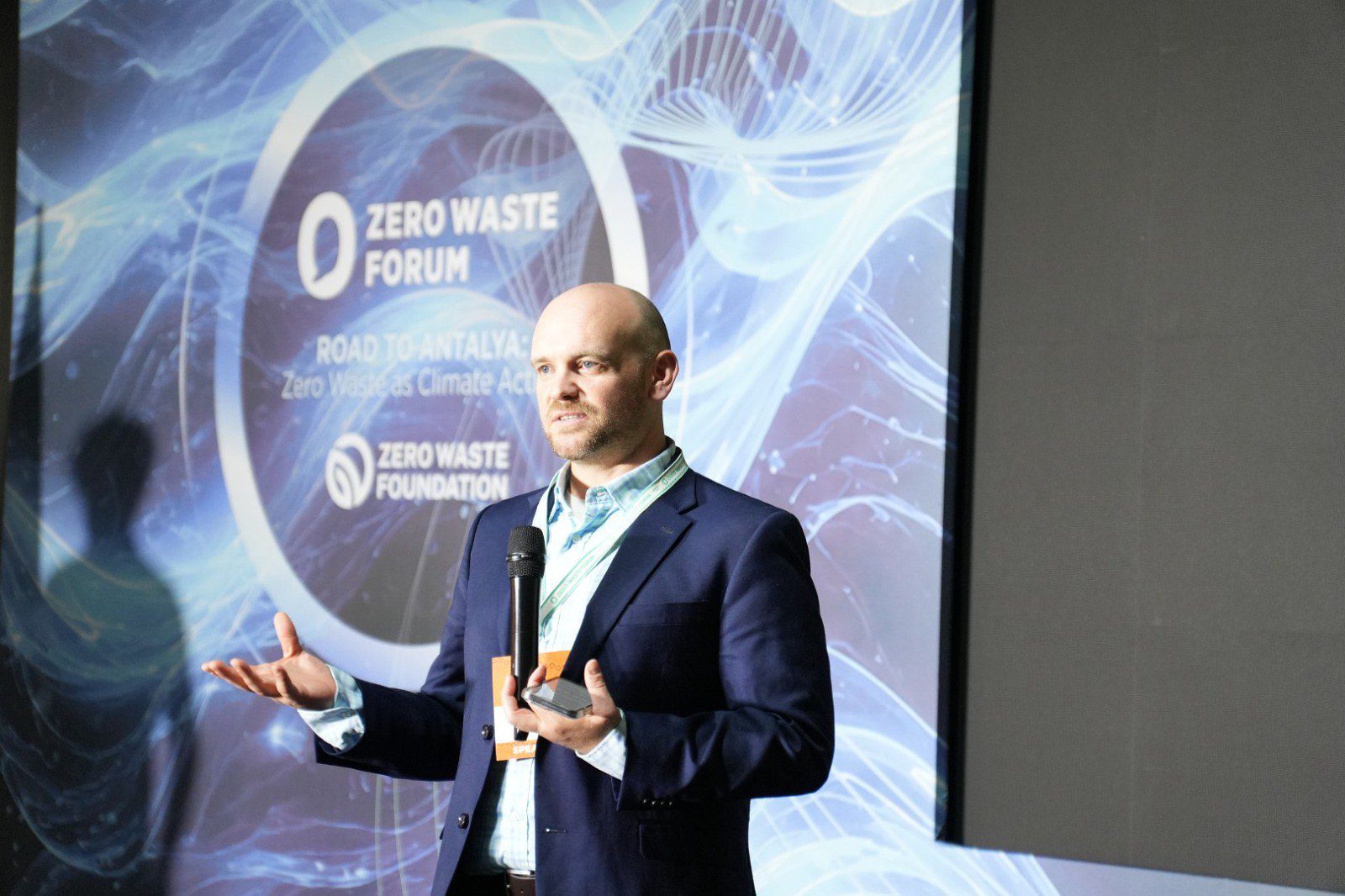
Zero Waste Forum – June 5-7 (Istanbul, Türkiye)
Serving as an informal kick-off moment to climate COP31, which will take place in Türkiye in November this year, the Zero Waste Foundation – whose president, Samed Ağırbaş, also serves as COP31 incoming High-Level Climate Champion – hosted a forum to gather the global community around one of the COP’s core themes: waste. ICLEI had a prominent role organizing “cities day” at the forum and hosted global mayors to tell how they’re moving toward waste-free communities. In the United States, cities of Austin, San Antonio, Maui County, Cupertino, and Denver are part of the ICLEI Circulars platform making strides to meet this vision. I had the honor of telling those stories as moderator for a session reporting out zero-waste successes from around the world.

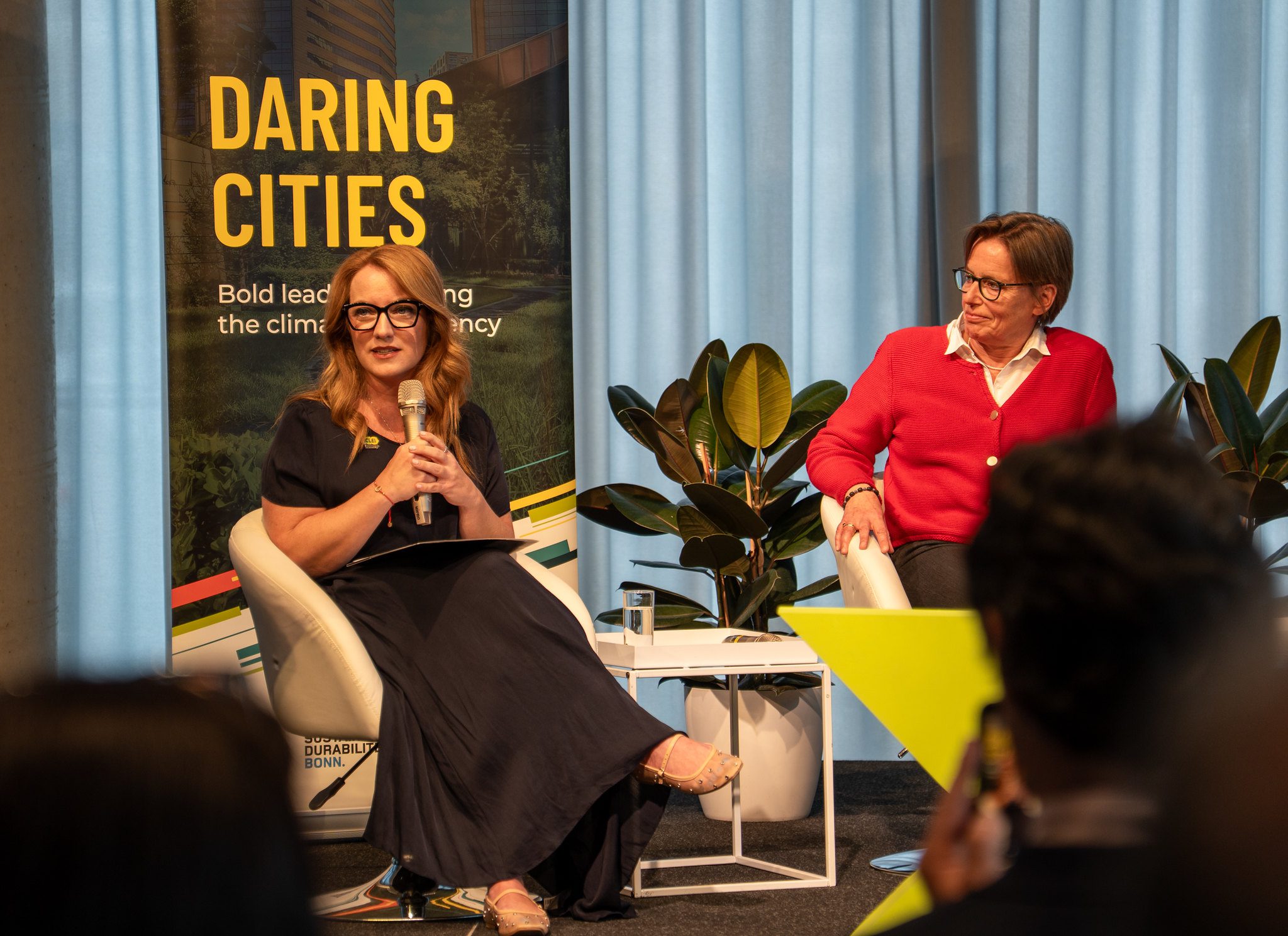
UNFCCC Bonn Climate Conference and Daring Cities – June 8-12 (Bonn, Germany)
Every year, City of Bonn, where the UNFCCC is headquartered, serves as host to the “Subsidiary Body,” or “SBs” conference – or, in plain English, the midway point between the climate COPs when a bunch of technical details are negotiated. Bonn is also home to ICLEI World Secretariat, and for years, we’ve hosted Daring Cities with the City of Bonn as the local-government-focused conference running alongside the SBs. This year, Supervisor Lindsey P. Horvath, of Los Angeles County, California, and ICLEI USA Board Member, served as head of U.S. delegation to the SBs and Daring Cities, and brought a message that U.S. cities and counties are unequivocally still acting on the Paris Agreement. Importantly, she was part of framing the LGMA’s priorities heading into COP31, which center on climate finance for cities, ensuring resilience is addressed, recognizing the role of local governments, and keeping fossil fuel phaseout at the core of negotiations. As part of a press conference opening SB64, Supervisor Horvath said, “Los Angeles County is all in on climate action. We’re advancing all COP30 implementation axes despite federal backsliding. The climate crisis is right in our backyard. We are home to the largest urban oil field in the U.S.—our region’s original industry. But today, we’re leading the transition by banning new oil drilling and phasing out existing oil wells. Los Angeles County will continue to lead the way, and we need the world’s partnership to realize a healthy, sustainable future for our planet and communities across the globe.”
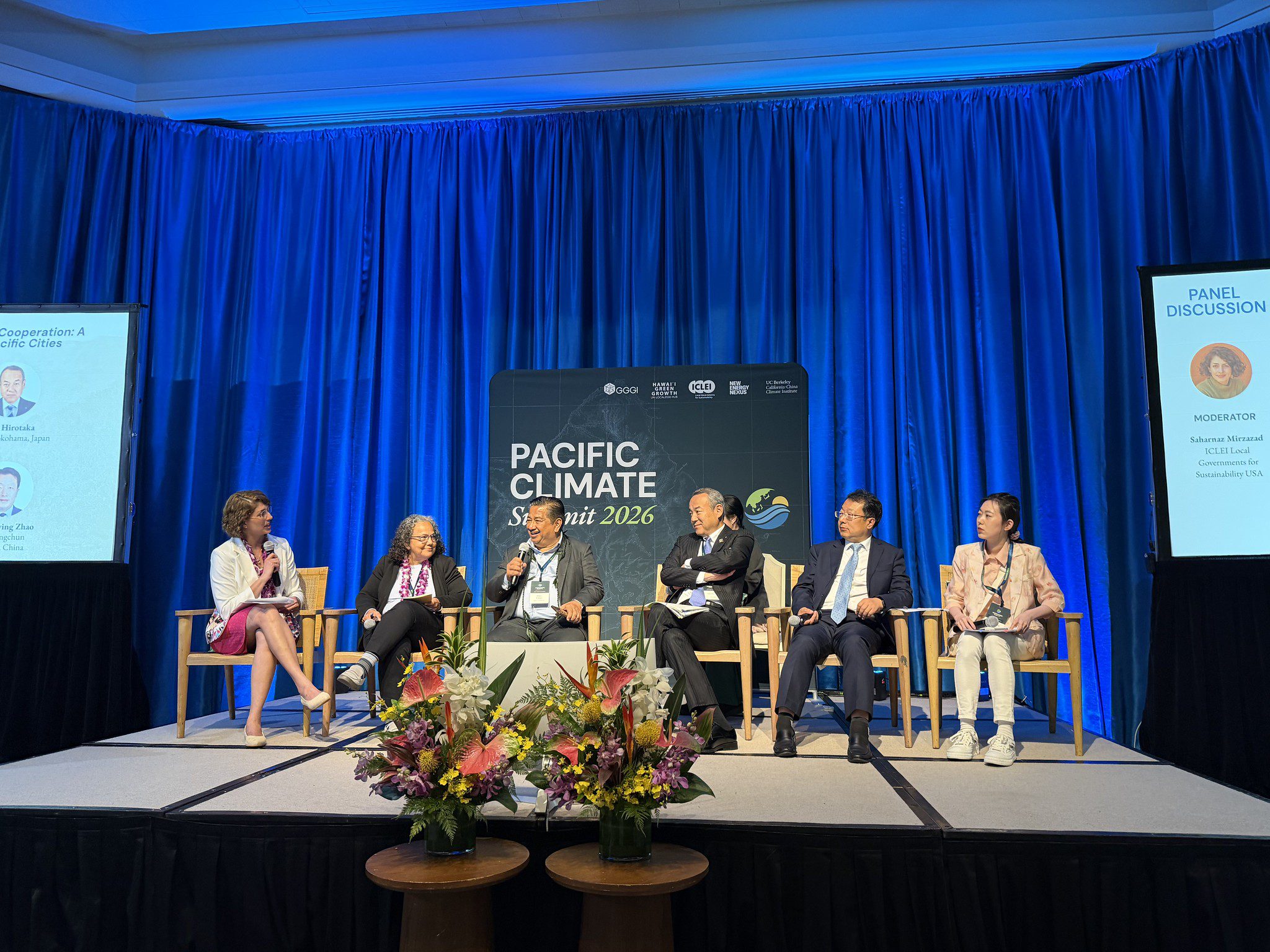
Pacific Climate Summit – June 9-11 (Honolulu, Hawai’i)
ICLEI USA partnered on the inaugural summit uniting communities across North America, Asia, and Oceania, that share the Pacific Ocean as their home. The conference covered topics ranging from building resilience the sea-level rise to responsible AI and safeguarding the world’s fish and food supply. Saharnaz Mirzazad, ICLEI USA CEO, moderated a panel of ICLEI members from City of Los Angeles, USA; Baguio City, Philippines; Changchun City, China; and Yokohama City, Japan. Saharnaz said, “For years, the ICLEI community has held a clear conviction: subnational governments are among the most powerful actors in advancing our shared environmental sustainability goals. The Pacific Summit affirmed something equally important — that a shared geography can cross national borders. The Pacific Ocean is not a divide, but a connector, linking communities that face common challenges, opportunities, and a shared path forward. This Summit showed how to turn that connection into collective momentum: by building an inclusive coalition that brings diverse sectors together around a single, ambitious vision. That is how we accelerate progress — together.”
What’s Ahead: How You Can Be Involved in the ‘COPs Super Year’
The COPs
The climate COP occurs annually in November, while the biodiversity and desertification COPs take place every two years. In 2026, all three happen, giving U.S. cities ample opportunity to share their commitment and story on the global stage.
The COPs
Each COP lasts two weeks. Here, we provide the strategic dates for cities.
- November 9-20 in Antalya, Turkiye: Climate COP31. More details will be available in the coming months. Sign up for our monthly webinar briefing to stay informed.
- August 20-23 in Ulaanbaatar, Mongolia: UNCCD COP17. As mentioned the “Desertification COP,” covers much more than drought, but also food systems, water, and land use. This year, ICLEI will host the Local and Regional Governments Forum on 21-22 August.
- October 20-25 in Yerevan, Armenia: Biodiversity COP17. ICLEI’s role is to ensure the Kunming-Montreal Biodiversity Agreement is instructive and helpful for local governments in the U.S. Because this year will be focused on turning the Agreement goals into on-the-ground action, local governments can be part of shaping what U.S. cities can and should be doing under the agreement.
Other Important Events
- June 21-24 in Nairobi, Kenya: Innovate4Cities. The premiere event for research and science on urban climate change, this year’s Innovate4Cities (hosted in partnership with Global Covenant of Mayors) is important in the leadup to the IPCC’s forthcoming Special Report on Cities.
- July 13-17 in New York City, NY: UN High Level Political Forum + 9th Local and Regional Governments Forum. SDG11 on cities is in focus for this year’s forum, making it particularly strategic. ICLEI USA will host a delegation of U.S. mayors, alongside counterparts from Germany, Brazil, Turkiye and more.
- September 21-24 in New York City, NY: Climate Week NYC. The annual “last stop before the COP” continues in NYC, where ICLEI USA will host a number of events. Details coming soon.
Travel Support
What about funding for travel support? We know many local government budgets are facing budget crunches, and international engagement can be costly. We strive to fundraise for participant travel wherever possible. In some cases, we have limited travel support identified – but often local governments self-fund all or a portion of their participation in the events.
How ICLEI USA Supports On-the-Ground Local Diplomacy
To support this effort, and in the spirit of international cooperation and friendship, ICLEI USA provides our local leaders with a range of support outlined below, coordinated through our Local Diplomacy Unit.
- Logistics and accreditation
- On-the-Ground Support (including speaking opportunities, bilateral meetings, and more)
- Communications
A level of these services is available to any ICLEI member as part of our delegation. For deeper, more intensive levels of support in these areas, we can scope out a project budget with your team that supports the Local Diplomacy Unit to support your goals.
Logistics and Accreditation
Successfully preparing for a major international event, such as a COP, can start months in advance. Other engagements will still need weeks of coordination between ICLEI and your office. To support delegates, we share intel around logistics — safety, cultural considerations, hotels, and travel — as we receive them. In some cases, it will be up to your team to arrange travel logistics; in other cases ICLEI will be able to provide an active role in these logistics.
Securing badges or other credentials coordinated through ICLEI is not “for purchase,” and we strive to provide credentials for a diverse range of local governments and leaders for every event. We seek to elevate local leaders and their staff who we know will bring a compelling leadership story to the COP or other event.
In all cases, ICLEI proactively ensures you are prepared for a successful trip by sharing any event agendas, travel considerations, official protocols, and more.
Speaking Engagement Booking and On-the-Ground Support
Through ICLEI’s large network of partners and our own position within the international system, we have access to a wide array of panels, roundtables, bilateral meetings, receptions and dinners, and other engagements that happen at or alongside each event. We seek prominent speaking positions for our delegates that align with their own goals and stories they wish to highlight. The degree of engagement and fullness of your agenda is entirely up to you.
For each event, we can help with arranging with session hosts and also provide talking points and background context to help shape your remarks. Because agendas evolve quickly on the ground, we remain in close communication throughout and can serve as an in-person aid in finding session locations, arranging meetings, and maintaining a connection with your staff.
Communications and Reporting
Telling your community’s story can be among the most important components of COP or other event attendance. By coordinating a set of communications deliverables — such as blog posts, social media posts, and inclusion in a final report and webinar — ICLEI and your office can create a jointly owned media presence.
Preview: ICLEI USA Local Leaders Circle Launching in Fall 2026
Finally, we are ready to support even more local leaders to be involved – both internationally, but also within their own state and region.
Later in 2026, we will be launching the ICLEI USA Local Leaders Circle as a space dedicated to mayors, councilmembers, county commissioners, and other elected officials who are dedicated to ensuring a healthy planet for their residents. Led by the elected leaders serving on ICLEI USA’s Board of Directors, including the Regional Executive Committee members who contribute to ICLEI’s global Council, the Leaders Circle will allow dozens of local officials to engage in diplomatic work abroad, as well as policy work at home.
The big, bold work of “holding the world together” city by city can feel immense and overwhelming. But we recognize that ICLEI has nearly 3,000 cities around the world already engaging with our global network. It’s important and necessary work to ensure a safe world for future generations. ICLEI USA mayors and local leaders are ready to step up and, in the words of Mayor Steve Patterson, “continue to build relationships, to demonstrate trust in each other…for what we can achieve together.”
Get Involved
If you or your elected official wants to be part of the Leaders Circle, attend a COP, or engage with ICLEI USA’s policy innovation work, we want to know. Contact your Member Advisor or email me at Kale.Roberts [at] iclei [dot] org.
About the Author
Kale Roberts is ICLEI USA’s Director of Membership and Local Diplomacy, where he supports dozens of cities, counties, Tribal nations, and their leaders, engage with their international peers across the ICLEI network.