

U.S. local governments are working to lower energy bills and keep essential services running while navigating tight budgets and uncertain funding. Through the Municipal Investment Fund (MIF), 49 communities have identified 949 projects representing more than $11 billion in potential investment. The next challenge is securing the financing to build them.
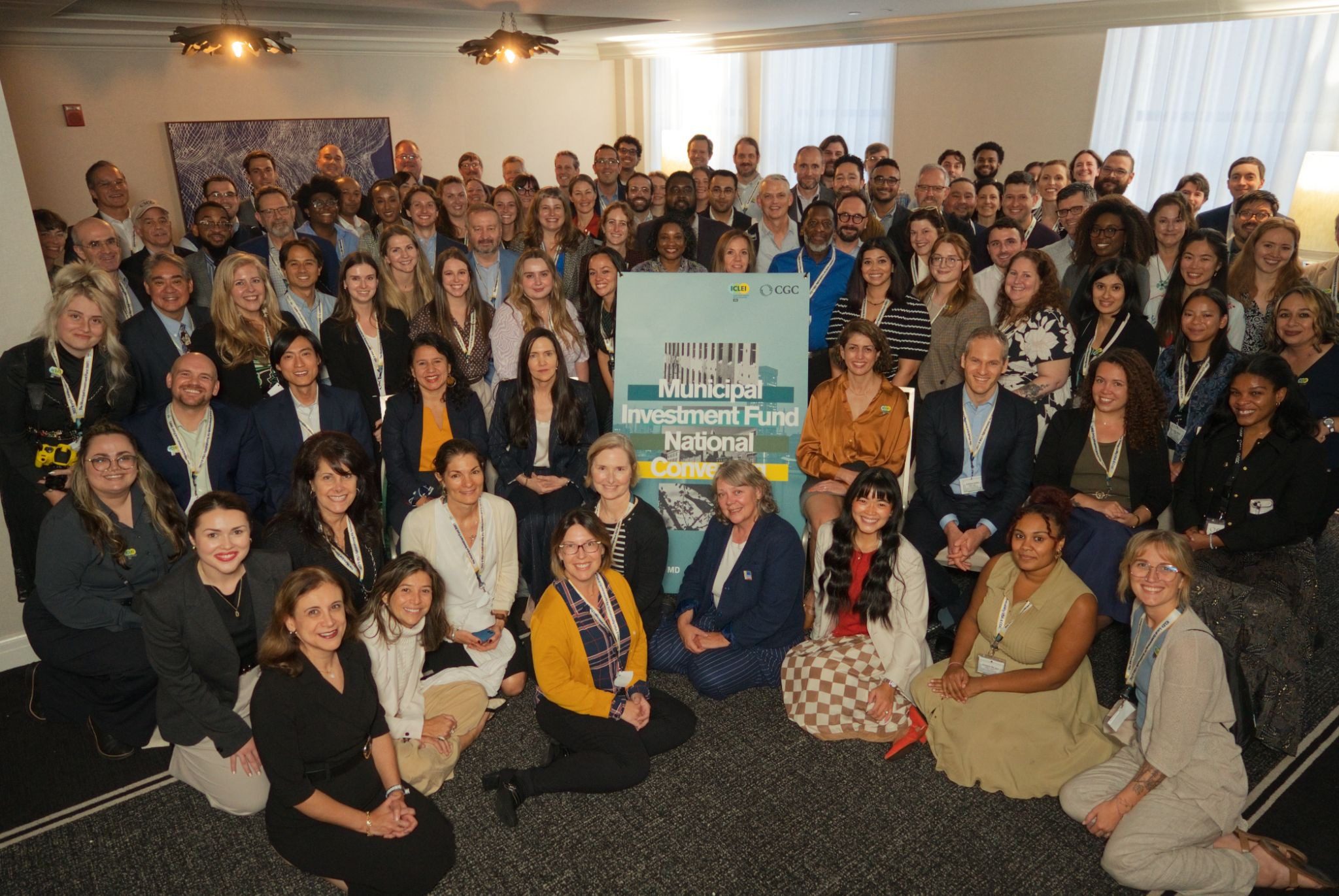
On October 6 and 7, 2026, over 200 local leaders, Tribal representatives, green banks, developers, investors, and technical assistance providers met in Baltimore to work through that challenge together.
ICLEI – Local Governments for Sustainability USA (ICLEI USA) and the CGC launched MIF to help communities turn local priorities into projects that can attract investment. They provided $11.25 million in grants and technical assistance to 49 communities in 46 states, Washington, D.C., Puerto Rico, and four Tribal nations. In six months, participating communities identified a pipeline of projects seeking private investment, ranging from building upgrades to clean energy infrastructure.
“Now think about that at the scale of over 20,000 local governments across the nation,” said ICLEI USA’s MIF Director Ryan Silber.
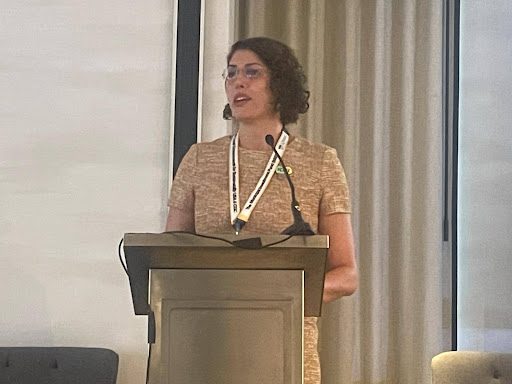
As ICLEI USA CEO Saharnaz Mirzazad put it, “This is what public money can do when it’s used to build the deal instead of paying for all of it.”
$11.25 million in. $11 billion in projects out. That’s the return U.S. local governments are delivering with MIF through blended capital stacks.
The pipeline shows how early public support can help communities prepare projects for additional investment. Turning that potential into completed projects will require continued technical assistance and financing partners.
Climate Action Is a Core Public Service
For residents, energy costs and reliability are everyday concerns. Higher utility bills can stretch an already tight household budget. For U.S. local governments, outages can disrupt fire stations, cooling centers, and other services residents depend on. Rising fuel costs also strain transit and public safety budgets.
Efficient buildings, solar with storage, and electric fleets can help communities manage those costs and make essential services more reliable.
Delivering these projects takes time, staff capacity, and funding that extends beyond a single grant cycle.ICLEI USA is helping U.S. local governments shift their approach. Local governments put what they already control to work: their credit, low-cost seed capital, assets, permitting authority, and purchasing and derisking powers. Applied correctly, these tools make projects highly investable. Lenders, utilities, and developers do the rest.
The MIF National Convening in Baltimore – A Major Stepping Stone Towards Financing
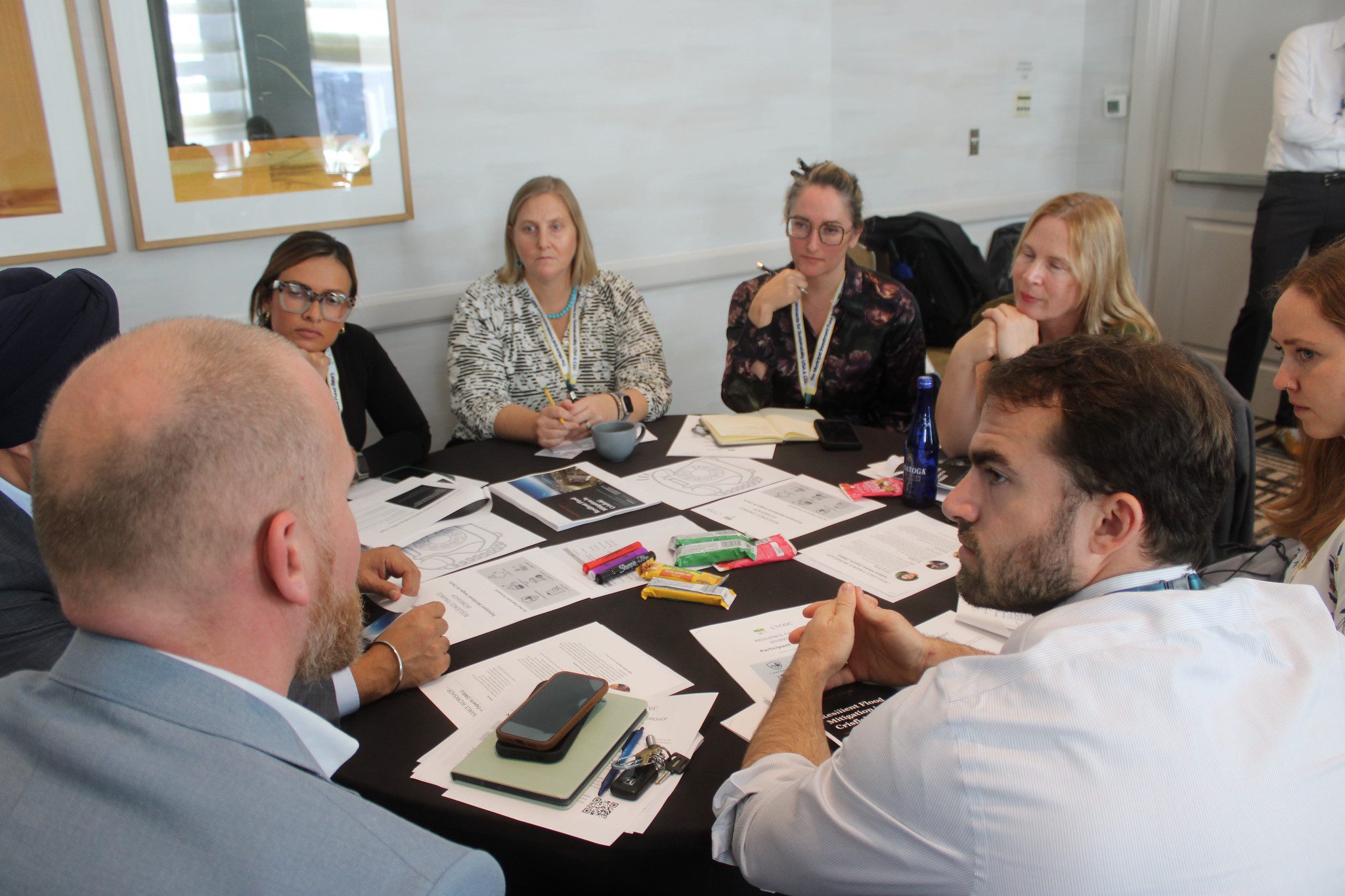
The MIF grants accelerated a movement, at times creating one where there was none. Communities built coalitions, identified shared priorities, and rallied stakeholders and partners around concrete project opportunities. Most importantly, it turned wishlists into pipelines for investment in projects spanning multiple sectors: solar and storage, building energy efficiency, geothermal, electrical vehicle adoption, and water-energy nexus. The National Convening in Baltimore was a critical opportunity for local government officials , green banks, and nonprofits advancing projects to exchange strategies and best practices and collaborate on projects with peers, technical assistance providers, national developers, and investors. The MIF grant converted ideas into pipelines. The MIF convening helped move projects in those pipelines closer to financing.
Through MIF, we found communities don’t lack projects; they lack early-stage capital. About four in ten priority MIF projects are stuck in predevelopment, the stage where feasibility studies, financial models, legal structures and utility coordination turn ideas into deals investors will fund. The median project costs about $1 million. “On its own, a $1 million project is hard to finance,” said Jessie Buendia, CGC’s Chief Impact Officer and Chief Customer Officer. “A hundred similar projects is a market.”
ICLEI USA and CGC uplifted MIF success stories on how to close the gap, including:
- Bundle deals. Douglas County, Kansas, packaged small projects into investable portfolios; Richmond used standard contracts and cooperative purchasing.
- Build local gap-fillers. Providence, Rhode Island, created a revolving fund for stranded projects; Louisville, Kentucky, is turning a federal loan program into a loan loss reserve to attract banks.
- Think in pipelines. “To push water uphill you need a system,” said Robin Hacke, Co-founder of the Center for Community Investment. Her advice: “Sometimes you expand a problem to solve it.”
- Standardize. CGC’s customer solutions approach offers a menu of proven options with qualified providers and repeatable financing.

Resilience projects need their own finance case and ICLEI USA Board Member Victoria Salinas, Climate Leader in Residence at Duke University and former FEMA Deputy Administrator for Resilience, led a workshop to build it. Using the Resilience Finance Guidebook she developed with Duke University’s Nicholas Institute for Energy, Environment & Sustainability.h, practitioners worked alongside municipal finance, philanthropy, and insurance experts to build financing strategies for real projects, from microgrid-powered resilience hubs to stream and wetland restoration that cuts flood risk. They sorted which benefits can support fees, taxes, or repayment and which need grants or public investment; matched capital sources to each project component; and named the evidence gaps to close. The takeaway: communities leave resilience value on the table, from fewer insurance claims to protected revenue, until they make that value count in the deal.

Bringing the Whole Government Into the Work
Saharnaz Mirzazad previewed ICLEI USA’s 2027–2031 strategic plan, From Commitment to Impact, which builds on communities’ planning work with greater support for implementation. Its priorities include helping projects reach financing, involving departments across local government, and expanding support through partner networks.
Sustainability staff cannot carry this work alone. Budget officers, public works teams, planners, and elected leaders all shape whether projects move forward. “We want to make sure that your budget officers know what this means,” emphasized Saharnaz Mirzazad.
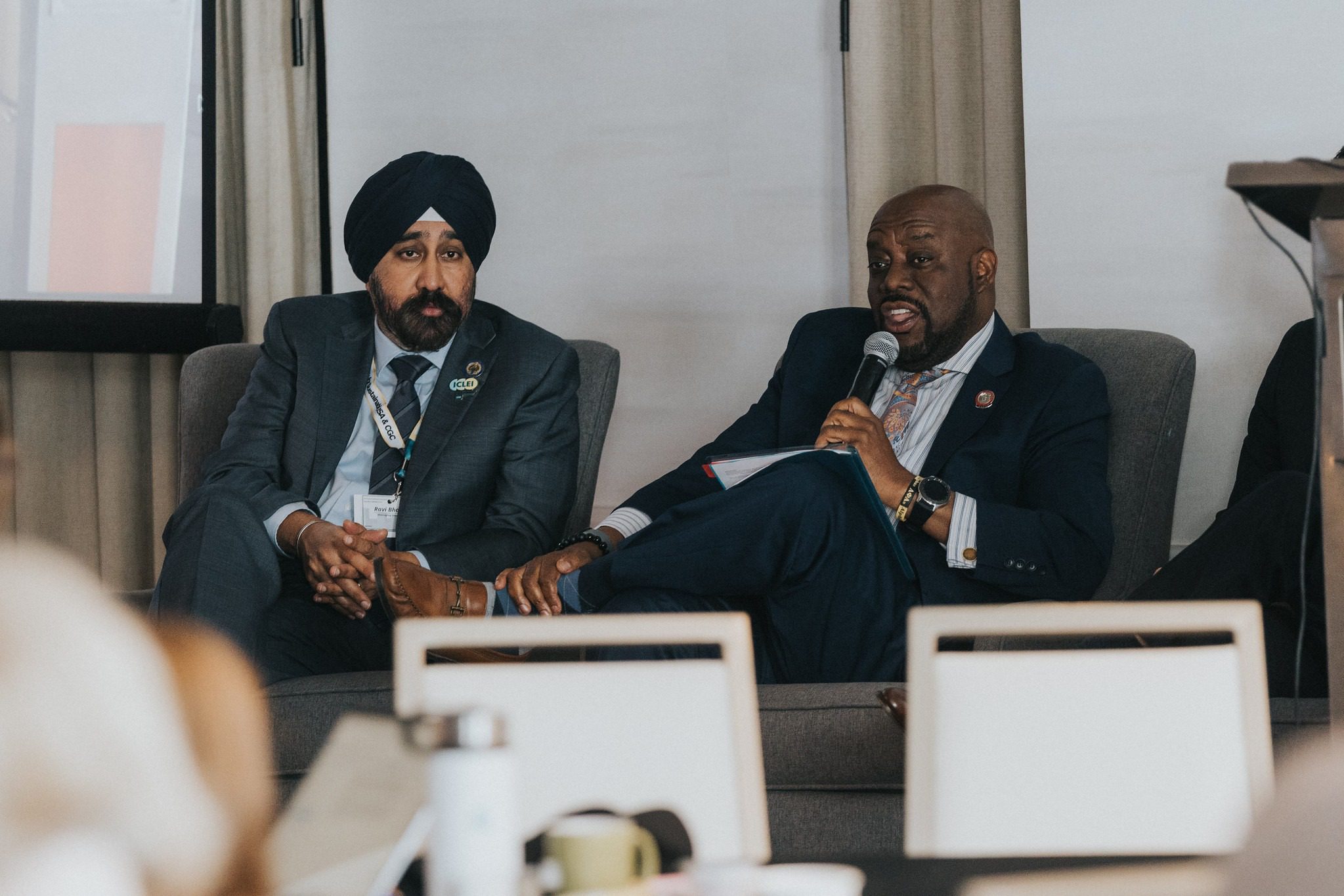
Savannah Mayor and ICLEI USA Board Member Van Johnson shared how the city’s clean energy plan reshaped work across departments, and solar on 27 city buildings saved $104,000 in one year. As mayor of Hoboken, ICLEI USA Board Chair and New Jersey Assemblymember Ravi Bhalla reflected on his tenure as mayor of Hoboken, describing the creation of the Department of Climate Action as an investment in public safety.
No single organization can reach every community, especially small, rural, and Tribal ones. ICLEI USA is partnering with the National League of Cities (NLC) to bring examples and lessons from MIF to a broader network of local governments.
What’s Next
Communities are all-in. They built investable pipelines. Now, they need partners to show up:
- Fund predevelopment to move stuck projects to investment-ready, starting with active deals like Baltimore’s Tivoly $5.5 million geothermal microgrid gap.
- Invest in whole-government capacity, reaching budget, public works, and planning staff.
- Scale the network of networks from 49 communities to 5,000.
- Bring capital to repeatable, standardized solutions.
“The communities in this room aren’t waiting for someone else to solve these problems,” Mirzazad said. The question for funders is how fast they will move to meet them.
In addition to connecting communities and their project sponsors to investors, ICLEI USA is partnering with technical assistance providers and building a suite of resources to support project delivery, including a public library any local government can use today:
- Community case studies showing how MIF grantees built their pipelines
- Toolkits for local governments, including sector-specific starter guides and cohort recordings
- White papers on finance tools local governments can leverage
- Resilience Finance Guidebook published by ICLEI USA and Duke University.
Members can find these resources and connect with peers in the ICLEI USA Commons.
Baltimore Mayor Brandon Scott closed Day 1 with the line that defined the convening: “The clean energy transition is happening. There is no undo button.” With private partners at the table, local governments can deliver the reliable energy, lower costs, and good jobs that communities everywhere are asking for.

ICLEI – Local Governments for Sustainability (ICLEI) is a global network working with more than 2,500 local and regional governments committed to sustainability and resilience.
As the U.S. office of a global ICLEI network, ICLEI USA develops and delivers leading-edge tools and resources, including its state-of-the-art climate action tool, ClearPath 2.0, to support local governments’ sustainability and resilience efforts. Our standards, tools, and programs credibly, transparently, and robustly reduce greenhouse gas emissions, improve lives and livelihoods, and protect natural resources in the U.S. communities we serve. Our Members and team of experts work together through peer exchange, partnerships, and capacity building to create systemic change for urban sustainability. Learn more at icleiusa.org.